
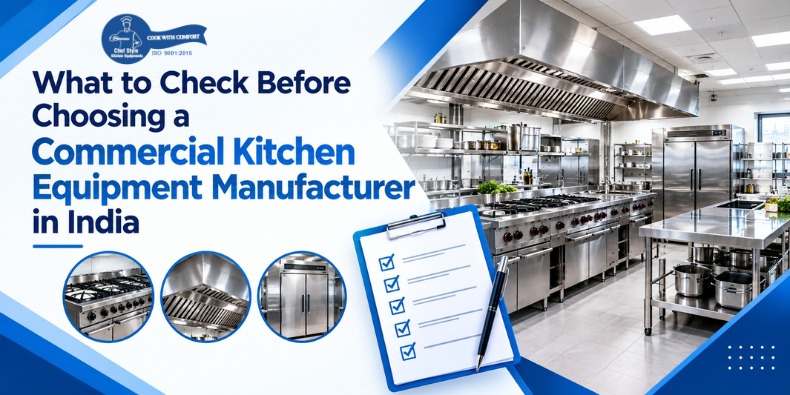
Choosing the right commercial kitchen equipment manufacturer in India is essential for restaurants, hotels, cafés, catering businesses, and institutional kitchens. The right manufacturer provides durable equipment, efficient kitchen solutions, and reliable after-sales support. Before making a purchase, businesses should evaluate product quality, manufacturing experience, customization options, pricing, and maintenance services to ensure long-term value.
- Understand Your Kitchen Requirements
Before selecting a commercial kitchen equipment manufacturer, identify your business requirements, available space, menu, and expected customer volume. Restaurants, hotels, bakeries, and catering businesses require different equipment depending on their daily operations. Understanding these needs helps you choose suitable appliances, avoid unnecessary purchases, and plan your budget effectively.
- Check the Manufacturer’s Experience
A manufacturer’s industry experience can provide valuable insight into its technical knowledge and ability to handle different commercial kitchen projects. Check its years of operation, previous installations, customer references, and experience serving businesses similar to yours. An experienced manufacturer may be better equipped to recommend practical solutions that improve kitchen workflow and meet your operational requirements.
- Evaluate Material Quality
Material quality directly affects the durability, hygiene, and maintenance requirements of commercial kitchen equipment. Stainless steel is widely used because it is durable, easy to clean, and resistant to corrosion when the appropriate grade is selected. Before purchasing, check the steel grade, thickness, welding quality, surface finish, and construction. High-quality materials can help reduce maintenance costs and extend equipment life.
- Review the Equipment Range
Choose a manufacturer that offers equipment suitable for your kitchen’s preparation, cooking, storage, washing, and serving requirements. Depending on your business, this may include commercial cooking ranges, ovens, worktables, refrigerators, freezers, dishwashing machines, storage racks, exhaust systems, and food counters. A suitable product range simplifies purchasing and helps coordinate equipment specifications across your kitchen.
- Check Customization Options
Every commercial kitchen has different space limitations and operational needs, making customization an important consideration. Check whether the manufacturer can provide equipment in specific dimensions, customized stainless steel counters, storage units, sinks, and specialized cooking stations. Request technical drawings before production begins to confirm measurements, utility connections, and installation requirements. Customized equipment can improve space utilization and support a more efficient kitchen workflow.
- Verify Quality Standards and Certifications
Quality standards and relevant certifications help you evaluate a manufacturer’s commitment to product quality and safety. Ask whether the equipment meets applicable electrical, gas safety, hygiene, and food-contact material requirements. Request supporting certificates or test reports where relevant, and verify that they apply to the specific products being purchased. Choosing equipment that meets applicable standards can help improve safety and support regulatory compliance.
- Compare Pricing and Value
When comparing commercial kitchen equipment manufacturers, consider more than the initial purchase price. Evaluate material quality, product specifications, installation charges, transportation, energy consumption, maintenance expenses, and warranty coverage. Request detailed quotations from multiple manufacturers and compare equivalent products to understand the actual value offered. A reasonably priced product with dependable performance and support may provide better long-term value than a cheaper alternative.
- Consider Energy Efficiency
Energy efficiency is an important factor because commercial kitchens often operate for extended hours. Equipment such as refrigerators, ovens, cooking ranges, dishwashers, and ventilation systems can contribute significantly to operating expenses. Compare energy consumption, heating efficiency, water usage, and available energy-saving features before purchasing. Selecting equipment that matches your kitchen’s capacity requirements can help control utility costs without compromising operational performance.
- Review Warranty and After-Sales Support
Reliable after-sales service helps keep commercial kitchen operations running smoothly when equipment requires maintenance or repairs. Before purchasing, understand the warranty period, covered components, exclusions, service availability, and spare parts support. Ask how technical assistance is provided and whether service is available in your location. A manufacturer with clear warranty conditions and dependable support can help minimize downtime and unexpected repair expenses.
- Check Customer Reviews and Previous Projects
Customer reviews and completed projects can help you assess a manufacturer’s reliability and product performance. Look for experience supplying equipment to restaurants, hotels, hospitals, catering facilities, and other relevant businesses. Review customer feedback, request references, and examine examples of previous installations. Speaking with existing customers can provide useful information about equipment durability, delivery timelines, and the quality of after-sales service.
- Confirm Delivery and Installation
Timely delivery and professional installation are important when establishing a new commercial kitchen or upgrading an existing facility. Delays can affect construction schedules and business opening dates. Confirm manufacturing lead times, transportation arrangements, installation responsibilities, commissioning procedures, and site preparation requirements before placing an order. A clearly agreed delivery schedule helps coordinate equipment installation with other kitchen construction activities.
- Evaluate Safety and Hygiene
Commercial kitchen equipment should support safe food preparation, effective cleaning, and hygienic working conditions. Check whether surfaces are easy to clean, food-contact materials are suitable, and equipment can be installed with appropriate ventilation and utility connections. Cooking appliances, refrigeration systems, sinks, and preparation counters should meet the requirements of their intended applications. Confirm applicable food safety and workplace safety requirements before finalizing your equipment selection.
- Consider Kitchen Layout Planning
An efficient kitchen layout improves staff movement, preparation speed, and overall productivity. Before purchasing equipment, consider the arrangement of cooking stations, preparation counters, refrigeration units, washing areas, and storage facilities. Ensure that sufficient space is available for staff movement, cleaning, maintenance, and ventilation. Working with a kitchen planner or an experienced manufacturer can help you select suitable equipment and reduce installation difficulties.
- Check Spare Parts Availability
Spare parts availability is essential for maintaining commercial kitchen equipment over the long term. Components such as motors, burners, electrical fittings, and refrigeration parts may eventually require replacement. Ask the manufacturer about spare parts availability, sourcing timelines, maintenance procedures, and service arrangements. A dependable supply of replacement components can reduce equipment downtime and help your business maintain consistent kitchen operations.
- Assess Technical Support
Technical support helps businesses make the right equipment choices and address operational issues after installation. Evaluate whether the manufacturer provides clear product specifications, installation guidance, operating instructions, and maintenance recommendations. The ability to answer technical questions and communicate service requirements clearly is also important. A manufacturer that offers dependable technical assistance can help you use your equipment effectively and manage maintenance requirements more efficiently.
Conclusion
Choosing the right commercial kitchen equipment manufacturer in India involves evaluating material quality, industry experience, product range, customization, pricing, energy efficiency, and after-sales support. Comparing these factors helps businesses identify equipment that meets their operational needs and offers long-term value. Before making a final decision, review quotations, verify relevant certifications, check customer references, and confirm warranty conditions. Selecting a reliable manufacturer can help create a durable, hygienic, and efficient commercial kitchen that supports smooth daily operations and long-term business growth