
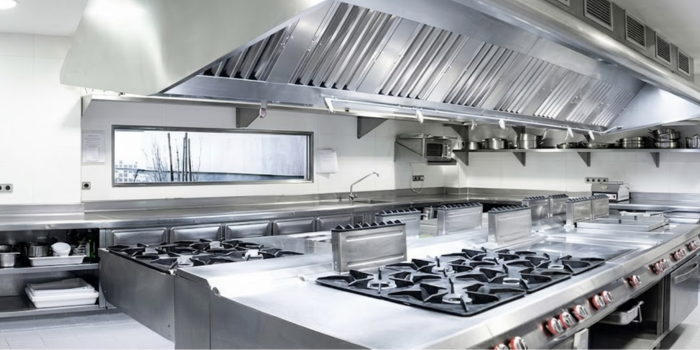
A kitchen layout is not about how modern it looks.
It’s about how efficiently it works when pressure is at its peak.
Where Every Efficient Kitchen Begins
Before equipment, before interiors, before anything else — there is one thing that matters:
movement.
A well-designed kitchen always follows a natural flow:
Storage → Preparation → Cooking → Plating → Service → Cleaning
When this flow is broken, everything slows down.
That’s why a smart commercial kitchen layout design focuses on how people and materials move — not just where things are placed.
Understanding the Core Zones
Every professional kitchen, big or small, is divided into clear working zones.
- Storage Area – raw materials, refrigeration, dry goods
- Preparation Zone – cutting, mixing, pre-cooking tasks
- Cooking Area – stoves, ovens, fryers
- Plating/Service Area – final assembly
- Cleaning Section – washing and waste management
When these zones are properly connected, work becomes smooth and predictable.
This structured approach is the base of a workflow-optimized kitchen setup.
Example 1: Assembly Line Layout
This layout is simple — everything moves in a straight line.
Best suited for:
- Cloud kitchens
- Fast food setups
- High-volume production
Here, each step follows the next without interruption.
That’s why a linear kitchen flow system is perfect for speed and consistency.
Example 2: Zone-Based Layout
In this setup, each section is dedicated to a specific task.
Best suited for:
- Multi-cuisine restaurants
- Large kitchens with multiple teams
Each team works independently, reducing confusion.
zoned kitchen design improves control, organization, and quality.
Example 3: Island Layout
Here, the main cooking equipment is placed at the center.
Best suited for:
- Open kitchens
- Premium dining spaces
It allows better supervision and interaction.
A well-planned Chefstyle central kitchen layoutcreates both efficiency and visual appeal.
What Most People Get Wrong
Even with good intentions, small mistakes can reduce efficiency:
- Placing storage too far from prep areas
- Overcrowding equipment
- Ignoring ventilation space
- Not leaving room for staff movement
These mistakes don’t show immediately — but during peak hours, they slow everything down.
That’s why a Chefstyle kitchen efficiency planningavoids these issues from the beginning.
Small Kitchen? Still Can Be Powerful
Many people think only large kitchens can be efficient.
That’s not true.
Even compact spaces can perform extremely well when designed smartly.
By using:
- Vertical storage
- Multi-purpose equipment
- Minimal movement planning
A Chefstyle space-optimized kitchen layoutcan turn a small kitchen into a high-performing one.
The Real Secret Behind Efficient Kitchens
Efficiency is not about working harder.
It’s about working smarter.
When your layout is right:
- Staff move less
- Work gets faster
- Mistakes reduce
- Output increases
Everything improves — without extra effort.
Final Thought
A kitchen is not just a place where food is made.
It’s a system that supports your entire business.
If that system is poorly designed, even the best team will struggle.
If it’s well designed, even a small team can perform like professionals.
Because in the end, success in a commercial kitchen is not just about cooking…
it’s about flow, structure, and smart design.
And all of that begins with the right planning — powered by
Chefstyle Kitchen Equipment.