
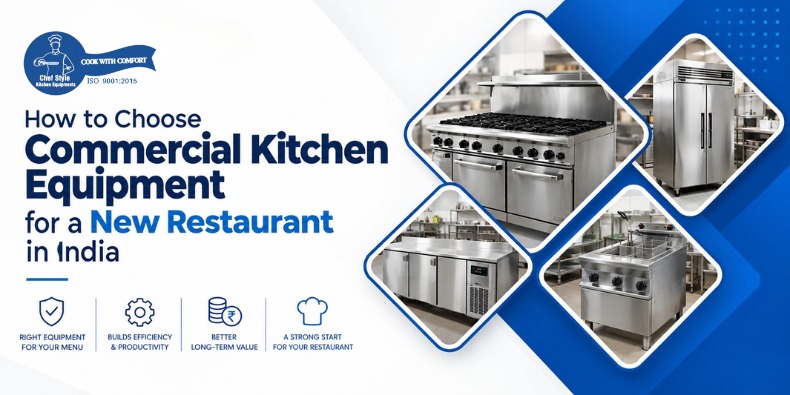
Starting a new restaurant in India involves several important decisions, from selecting the right location and finalising the menu to designing the kitchen and purchasing the right equipment. Among these, choosing the right commercial kitchen equipment is one of the most important steps because it directly affects food preparation, kitchen workflow, efficiency, hygiene, and long-term operating costs.
A well-planned commercial kitchen setup should be based on your restaurant’s menu, available space, expected customer volume, and future growth. Instead of choosing equipment simply because it looks professional or has a low price, restaurant owners should consider how each piece of equipment will support their daily operations.
- Start With Your Restaurant Menu
Your menu should be the first consideration when selecting restaurant kitchen equipment. Every restaurant has different cooking and preparation requirements. A South Indian restaurant may need dosa plates, wet grinders and steam cooking equipment, while a bakery may require commercial ovens, dough mixers and planetary mixers.
Understanding your menu helps you identify the equipment you actually need. It also prevents unnecessary spending on machines that may not be used regularly.
- Consider Your Kitchen Space and Layout
The size and layout of your kitchen play a major role in equipment selection. Commercial kitchens need sufficient space for food preparation, cooking, storage, cleaning and staff movement.
A good kitchen workflow generally moves from storage to preparation, cooking, plating and service without unnecessary movement. When planning your kitchen, consider the size of each equipment unit along with gas connections, electrical requirements, water supply, drainage and ventilation.
Proper planning can make even a compact kitchen more efficient.
- Choose Equipment Based on Your Expected Workload
The equipment required for a small café will be different from that required for a busy restaurant or hotel kitchen. Before purchasing commercial cooking equipment, estimate how much food you expect to prepare during normal and peak business hours.
Equipment with insufficient capacity can slow down service, while unnecessarily large equipment can increase your initial investment and operating costs. Choosing the right capacity helps your kitchen team maintain a consistent workflow during busy hours.
- Focus on Essential Commercial Kitchen Equipment
A professional restaurant kitchen usually requires equipment for cooking, food preparation, refrigeration, storage and cleaning. The exact requirements depend on your menu and business size.Some of the major categories include commercial cooking equipment, food preparation equipment, commercial refrigeration, stainless steel work tables, storage solutions and dishwashing equipment.Rather than purchasing everything at once, prioritise the equipment that is essential for your daily menu and gradually add specialised equipment as your business grows.
- Choose Durable Stainless Steel Equipment
Durability is an important factor when investing in industrial kitchen equipment. Commercial kitchens operate for long hours, so equipment must be able to withstand frequent use, heat, moisture and regular cleaning.
Stainless steel is widely used in professional kitchens for work tables, sinks, storage racks, counters and other kitchen equipment because it is durable, easy to clean and suitable for commercial food preparation environments.
When comparing equipment, look beyond appearance and consider construction quality, material, finishing and ease of maintenance.
- Don’t Overlook Refrigeration and Storage
Proper storage is essential for maintaining ingredient quality and organising a busy restaurant kitchen. Depending on the menu and volume of operations, a restaurant may require commercial refrigerators, deep freezers, under-counter refrigeration or other cold-storage solutions.
The required capacity should be determined by the quantity and type of ingredients used, delivery frequency and available storage space. Good storage planning can also help reduce unnecessary food wastage.
- Plan Proper Kitchen Ventilation
Ventilation is another essential part of a commercial kitchen. Cooking generates heat, smoke, steam and grease, particularly in high-volume kitchens.
A suitable commercial kitchen exhaust system helps remove heat, smoke and cooking fumes from the workspace. Exhaust hoods, ducting, filters and exhaust fans should be planned according to the kitchen layout and cooking equipment.
Ventilation should ideally be considered during the initial kitchen design rather than added after the equipment has been installed.
- Consider Energy Efficiency and Maintenance
The purchase price of kitchen equipment is not the only cost restaurant owners should consider. Electricity or gas consumption, maintenance, spare parts and equipment downtime can also affect the overall operating cost.
Before purchasing equipment, ask about warranty, maintenance requirements, availability of spare parts and after-sales service. Choosing equipment that is practical to maintain can help avoid unnecessary interruptions during restaurant operations.
- Select the Right Commercial Kitchen Equipment Supplier
Choosing the right commercial kitchen equipment supplier in India is just as important as choosing the equipment itself. A reliable supplier should understand your restaurant concept and help you select equipment according to your menu, kitchen size and expected production volume.
For a new restaurant, it can be beneficial to work with a supplier who can provide support for commercial kitchen design, equipment selection, stainless steel fabrication, installation and kitchen exhaust solutions.
This makes the overall kitchen setup more organised and reduces the risk of purchasing equipment that does not fit your operational requirements.
- Plan Your Budget Wisely
A commercial kitchen represents a significant investment, so it is important to create a realistic budget before purchasing equipment. Avoid focusing only on the cheapest available option. Low-cost equipment may sometimes result in higher maintenance expenses or shorter service life.
Instead, consider the equipment’s quality, capacity, energy consumption, warranty and expected working life. The goal should be to find equipment that provides practical value over the long term.
Final Thoughts
Choosing commercial kitchen equipment for a new restaurant in India requires careful planning rather than simply comparing prices. Your menu, kitchen space, expected workload, storage requirements, ventilation, equipment quality and maintenance needs should all be considered before making a purchase.
A professionally planned kitchen can improve workflow, support consistent food preparation and make daily restaurant operations more efficient. From commercial cooking equipment and refrigeration to stainless steel fabrication and kitchen exhaust systems, every element should work together as part of the overall kitchen design.
If you are setting up a new restaurant, café, bakery, hotel or cloud kitchen, Chefstyle Kitchen Equipment can help you plan your commercial kitchen based on your space, menu and operational requirement