
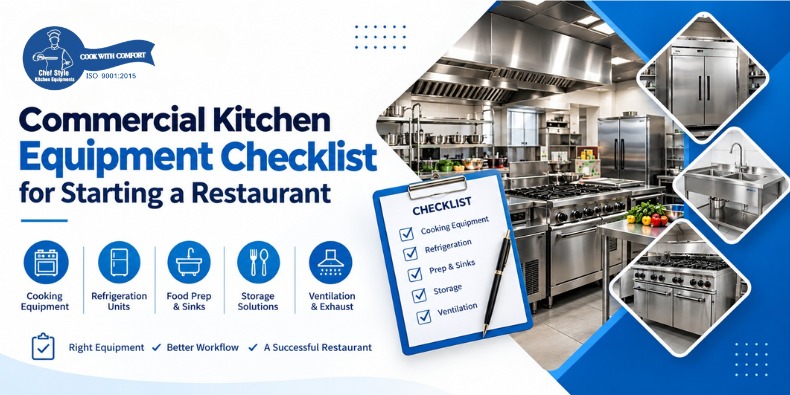
Starting a restaurant requires careful planning, especially when it comes to setting up the kitchen. The right commercial kitchen equipment can improve cooking efficiency, reduce preparation time, maintain hygiene, and support smooth restaurant operations.
Before purchasing equipment, restaurant owners should understand their menu, kitchen space, expected customer volume, and budget. This commercial kitchen equipment checklist covers the essential areas to consider when setting up a professional restaurant kitchen in India.
- Cooking Equipment
Cooking equipment forms the core of every commercial kitchen. Depending on your menu, you may need commercial gas ranges, burners, ovens, fryers, griddles, tandoors, steam cooking equipment, or other specialised cooking machines.
The right equipment should be selected based on your cooking methods, daily production, and peak-hour requirements. Avoid purchasing large equipment that your kitchen does not actually need.
- Food Preparation Equipment
Efficient food preparation can save significant time during busy restaurant hours. Depending on your menu, your kitchen may require commercial mixers, wet grinders, dough kneaders, food processors, vegetable preparation machines, or other preparation equipment.
Choosing suitable commercial food preparation equipment can reduce manual work and help maintain consistency in food preparation.
- Commercial Refrigeration
Proper refrigeration is essential for storing vegetables, dairy products, meat, seafood, prepared ingredients, and other perishable items.
Your checklist should include suitable commercial refrigerators, deep freezers, under-counter refrigeration, or cold storage solutions based on your restaurant’s storage requirements. The capacity should match your ingredient volume and delivery schedule.
- Stainless Steel Kitchen Equipment
Stainless steel equipment is commonly used in professional kitchens because it is durable, easy to clean, and suitable for regular food preparation.
Essential items may include stainless steel work tables, preparation counters, sinks, storage racks, shelves, and service counters. The dimensions should be planned according to your available kitchen space and workflow.
- Kitchen Exhaust and Ventilation
A proper ventilation system is an essential part of any commercial kitchen. Cooking generates heat, smoke, steam, grease, and odours, particularly during high-volume operations.
A suitable commercial kitchen exhaust system may include exhaust hoods, grease filters, ducting, and exhaust fans. The ventilation system should be planned along with the cooking equipment and kitchen layout.
- Dishwashing and Cleaning Equipment
Cleaning and sanitation should be considered from the beginning of the kitchen design. Depending on the size of your restaurant, you may require commercial dishwashing equipment, stainless steel sinks, pre-rinse units, drainage areas, and dedicated hand-washing facilities.
Keeping the cleaning area properly separated from food preparation areas can also help maintain a more organised kitchen workflow.
- Storage and Shelving
A well-organised storage system helps kitchen staff find ingredients, utensils, and supplies quickly. Stainless steel racks, wall shelves, storage cabinets, ingredient containers, and dry-storage solutions can be selected according to the available space.
Good storage planning also helps prevent clutter and makes better use of the kitchen area.
- Safety and Utility Requirements
Before installing your restaurant kitchen equipment, make sure the kitchen has suitable electrical connections, gas supply, water connections, drainage, ventilation, and safety provisions.
Equipment should be installed according to the manufacturer’s requirements and applicable safety standards. Planning these utilities before installation can prevent costly modifications later.
- Check Warranty and After-Sales Service
A commercial kitchen operates for long hours, so equipment maintenance and service support are important. Before purchasing, check the warranty, availability of spare parts, installation support, and after-sales service.
Choosing a reliable commercial kitchen equipment supplier in India can make equipment installation, maintenance, and future expansion easier.
- Final Commercial Kitchen Equipment Checklist
Before opening your restaurant, review the major categories:
- Cooking equipment
- Food preparation equipment
- Commercial refrigeration
- Stainless steel fabrication
- Exhaust and ventilation
- Dishwashing and cleaning
- Storage and shelving
- Kitchen utilities and safety
The exact equipment required will depend on your restaurant concept, menu, kitchen size, and expected production volume.
Final Thoughts
Setting up a restaurant kitchen is a long-term investment. Instead of buying equipment based only on price, consider quality, capacity, durability, energy consumption, maintenance, and after-sales support.
A properly planned commercial kitchen setup can improve workflow, support faster service, and create a more organised working environment for your kitchen team.
Whether you are opening a restaurant, hotel, café, bakery, cloud kitchen, or catering business, choosing the right commercial kitchen equipment and planning the kitchen layout carefully can make a significant difference to your daily operations.
Chef style Kitchen Equipment can help businesses plan professional kitchen solutions based on their menu, available space, operational requirements, and future growth.